

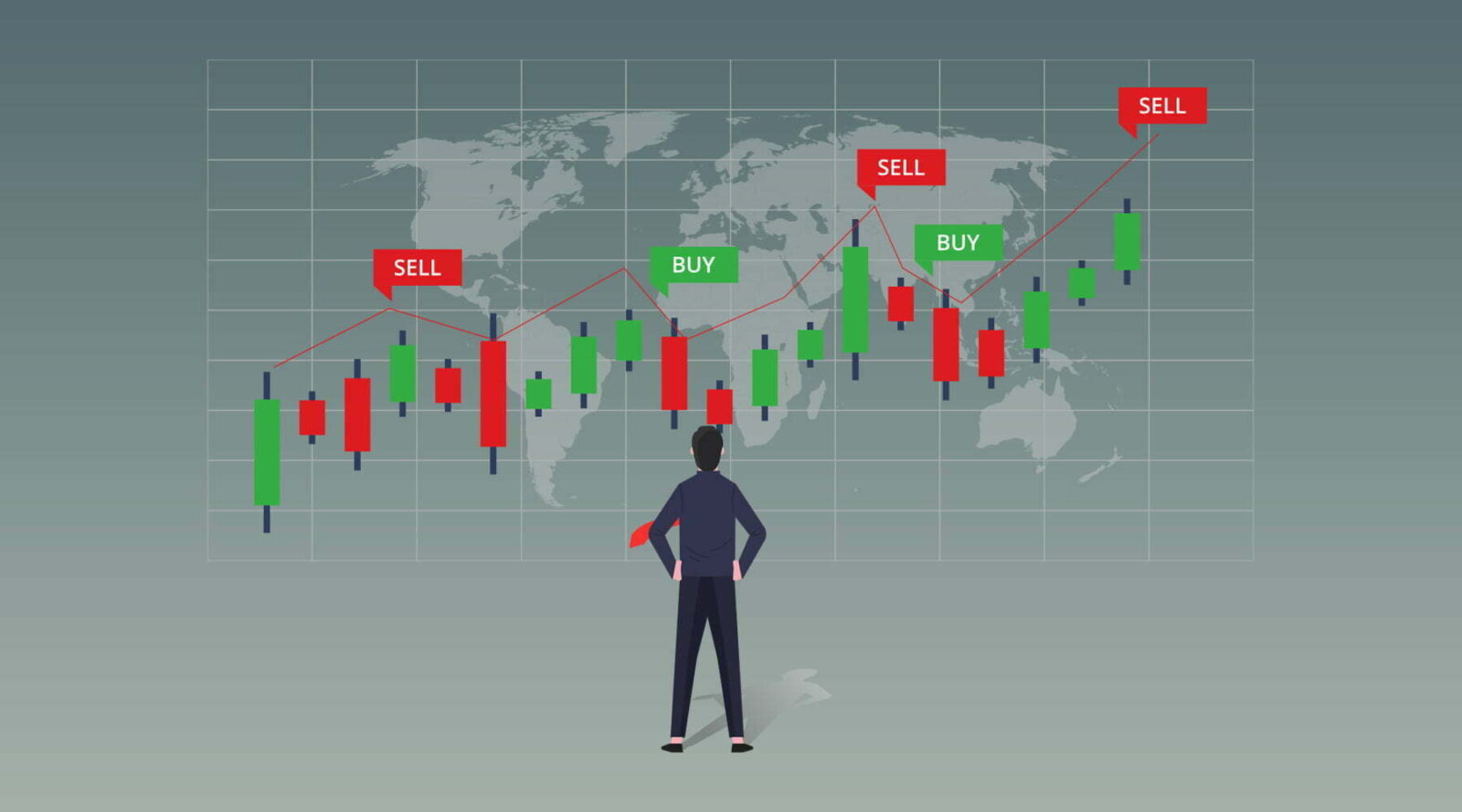
Traders depend on popular trading indicators (indicator ที่ นิยม ใช้) to analyze the price data. It provides insights into potential market behavior.
Moving averages: Identifying market trend direction
Traders identify the overall direction of a market trend to smooth the price fluctuation through moving averages. The two most common types are:
- Simple Moving Average
- Exponential Moving Average
SMA calculates the average price. EMA gives more weight to the recent price movements, making it more responsive.
Traders use moving averages to determine whether the market is in:
- Uptrend
- Downtrend
Bullish momentum signals when the price moves above the moving average. Bearish momentum may be forming when the price falls below it.
For example:
A trader using a 50-day SMA notices a stock price consistently stays above the line. It indicates a stable upward trend. Traders decide to hold or open a buy position.
Moving averages simplify the trend analysis. Traders stay aligned with the overall market direction.
Relative Strength Index: It measures overbought and oversold conditions
The Relative Strength Index measures the price movements, such as:
- Speed
- Change
It uses a scale from 0 to 100. Traders use RSI to identify whether an asset is:
- Overbought
- Oversold
A reading above 70 will suggest overbought conditions. A reading below 30 indicates oversold levels.
Traders spot potential reversal points through RSI. It is more effective when combined with other indicators. The strong trends keep RSI levels high or low for extended periods.
For example:
A trader sees a potential buying opportunity, if RSI drops to 25. The price shows signs of stabilizing before a price rebound occurs.
RSI offers valuable insight into momentum shifts. It is possible to reverse signals when used carefully.
Moving Average Convergence Divergence: It tracks momentum changes
MACD is a trend-following momentum indicator. It shows the relationship between two moving averages. It includes:
- MACD line
- signal line
- histogram
Traders use MACD to:
- identify trend strength
- potential entry or exit points
The bullish momentum shows when the MACD line crosses above the signal line. It signals bearish momentum when it crosses below.
MACD helps confirm the strength of existing trends as a versatile tool for various trading strategies.
MACD helps traders recognize momentum shifts. Trend strength is confirmed to improve timing for trade entries and exits.
Bollinger Bands: It measures market volatility
Bollinger Bands consist of a moving average. Traders use Bollinger Bands to identify:
- price breakouts
- potential reversal zones
It indicates overbought conditions when the price touches or moves beyond the upper band. It signals oversold conditions when the price approaches the lower band.
Traders monitor band contractions as they can indicate upcoming strong price movements.
Traders evaluate volatility and predicts through Bollinger bands:
- price expansion
- reversal opportunities
Stochastic Oscillator: A technical momentum indicator
Stochastic Oscillator compares a security’s closing price to its price range in 14 days. It produces values to oscillate between 0 and 100 to identify:
- overbought (>80)
- oversold (<20)
- potential trend reversals
It identifies momentum changes. Readings above 80 suggest overbought conditions. The readings below 20 indicate oversold conditions.
The indicator is used to detect early reversal signals. Traders watch for crossover signals between the oscillator lines to confirm trade opportunities.
Traders identify momentum shifts and potential entry points during ranging markets using the Stochastic Oscillator.
FAQs
What is the best trading indicator for beginners?
Moving averages are recommended because they are simple to understand. It is effective for identifying trends.
Are traders can rely on one indicator only?
Multiple indicators confirm signals. It reduces the risk of false trading decisions.
Do indicators work in all market conditions?
Some indicators perform better in trending markets. Others work best in a range of markets. Traders adjust based on market behavior.